Employee and Subcontractor Training Program on Environmental and Biodiversity Management
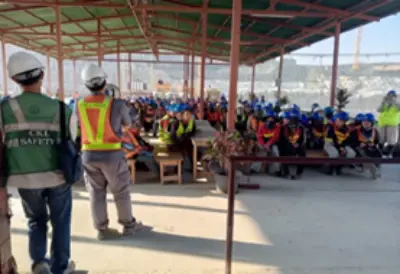
To ensure that employees and subcontractors comply with environmental management guidelines and biodiversity regulations, the Luang Prabang Hydropower Project implemented a comprehensive training program in 2025, including:
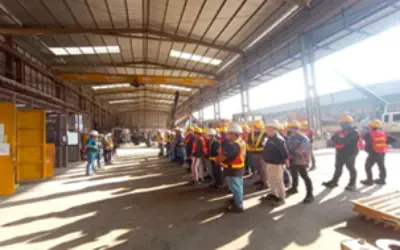
- Orientation Training: Conducted 116 sessions for new employees before starting work, training a total of 1,847 participants.
- Toolbox Talks: Held 90 sessions as daily briefings across different project areas, reaching 6,479 participants.
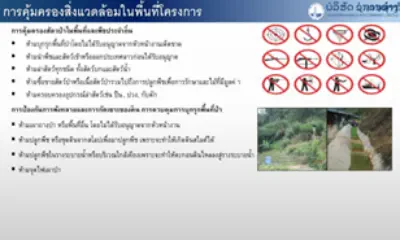
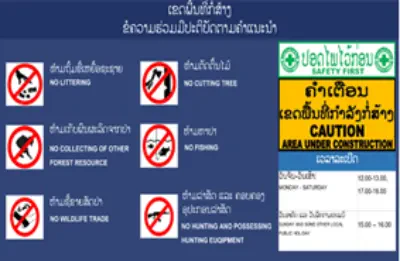
- Total Engagement: More than 8,326 individuals have participated in the training sessions. As part of the initiative, information boards were installed to communicate essential rules, regulations, and best practices.
The training program emphasized Understanding project regulations, workplace conduct, and responsible cohabitation within the project site. Environmental protection measures include: Prohibiting fishing, wildlife hunting, and the trade of forest products. Minimizing pollution and preventing activities that could impact the World Heritage site. Proper procedures for reporting and handling the discovery of ancient artifacts or explosive materials. The training sessions were conducted in alignment with the Environmental and Social Management and Monitoring Plan - Construction Phase (ESMMP-CP) and the Site-Specific Environmental Management and Monitoring Plan (SSEMMP). As a result, in the past year, there have been no reported violations or incidents affecting biodiversity.
In addition, the company invests in employee development by organizing training programs and study visits focused on implementing advanced technology and effective management in projects. These initiatives also cover biodiversity management, ecosystem restoration, and conservation, as well as strategies for mitigating environmental impacts, particularly in the Mekong River Basin for sustainable development. For example, employees participate in site visits to hydroelectric dams on the Danube River in Austria to gain insights into best practices. These efforts aim to improve operational efficiency while minimizing environmental impact.